Some Music Selections
It has been a really cold winter, perhaps the coldest since the first winter I spent here in 2010. During that first year I was surprised, amused and maybe a little elated to find that the temperature could hang out below 0 for a couple of weeks. There have been a few such events in the 16 years that I’ve lived in Madison, Wisconsin, but this winter reminds me more of that first winter than any. I grew up in the Boston area and while snow was common, so was slush and mixed weather. The lack of relative cold always made the northeast particularly disgusting in the winter except for the days that it actually snowed. Wisconsin winters, at least the ones like this, are different. When it snows, it is cold enough that the snow just sticks around in its original crystaline form. The lakes freeze solid and everything is undeniably sleeping. This winter has been a true winter and I have really missed true winter.
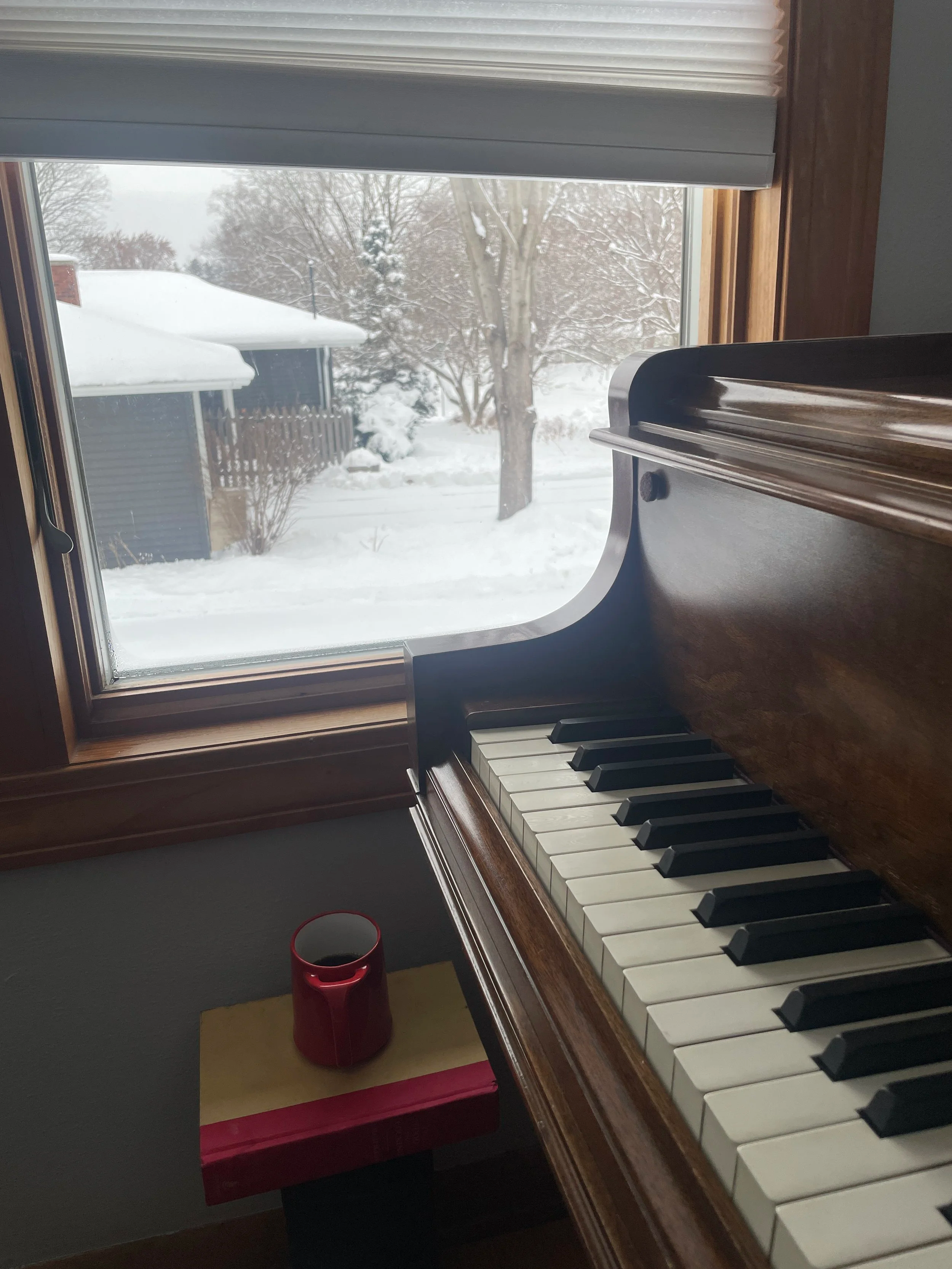
The downside of course is that I have not been able to ride my bike to rehearsal since the end of October, shortly after my last post. It got cold so early that riding with my cello started to seem foolish, or if you’re an observer perhaps “more foolish” is your take. I am banking on our April subscription concert weekend being warm enough to resume riding with cello.
In the mean time I have been spending a lot of time listening to music, riding my bike virtually on Zwift and practicing. I had a recital in early January which kicked off about 9 consecutive weeks of concerts. Not a bad problem to have, but certainly a little taxing. All told I think I have 11 different programs I will have played between January 9th and March 15th. I was invited to play at Arizona Music Fest at the end of February and that should be a great musical experience and a brief break from the cold.
I’m also moderating a Strava/Zwift group called “Symphonic Cyclists” and have been organizing group rides on Monday mornings. Last week I worked out with a musician from the Utah Symphony who I’d never met. He found the group through a friend. It was a great virtual hang and far better than most online interactions tend to be these days. I didn’t need to mention this except that I want more people to join this group so if you are reading this and you use Zwift and play an instrument, you know what to do. They always say working out with a friend results in a better workout and that seems to be true even if a) you’ve never me the friend in person and b) only communicate with them via group text. Kind of an odd realization that some forms of internet communication can be so alienating while others can be so connecting.
I’ve been listening to a lot more music at home these days. It’s something interesting to do that doesn’t take place outside and frankly it makes up a significant portion of the preparation I do for performing. I find as I get older that there is much less of a need for me to touch my instrument until I really know the music that I’m playing. Listening first helps me approach the cello with more clarity and helps me identify areas for practice.
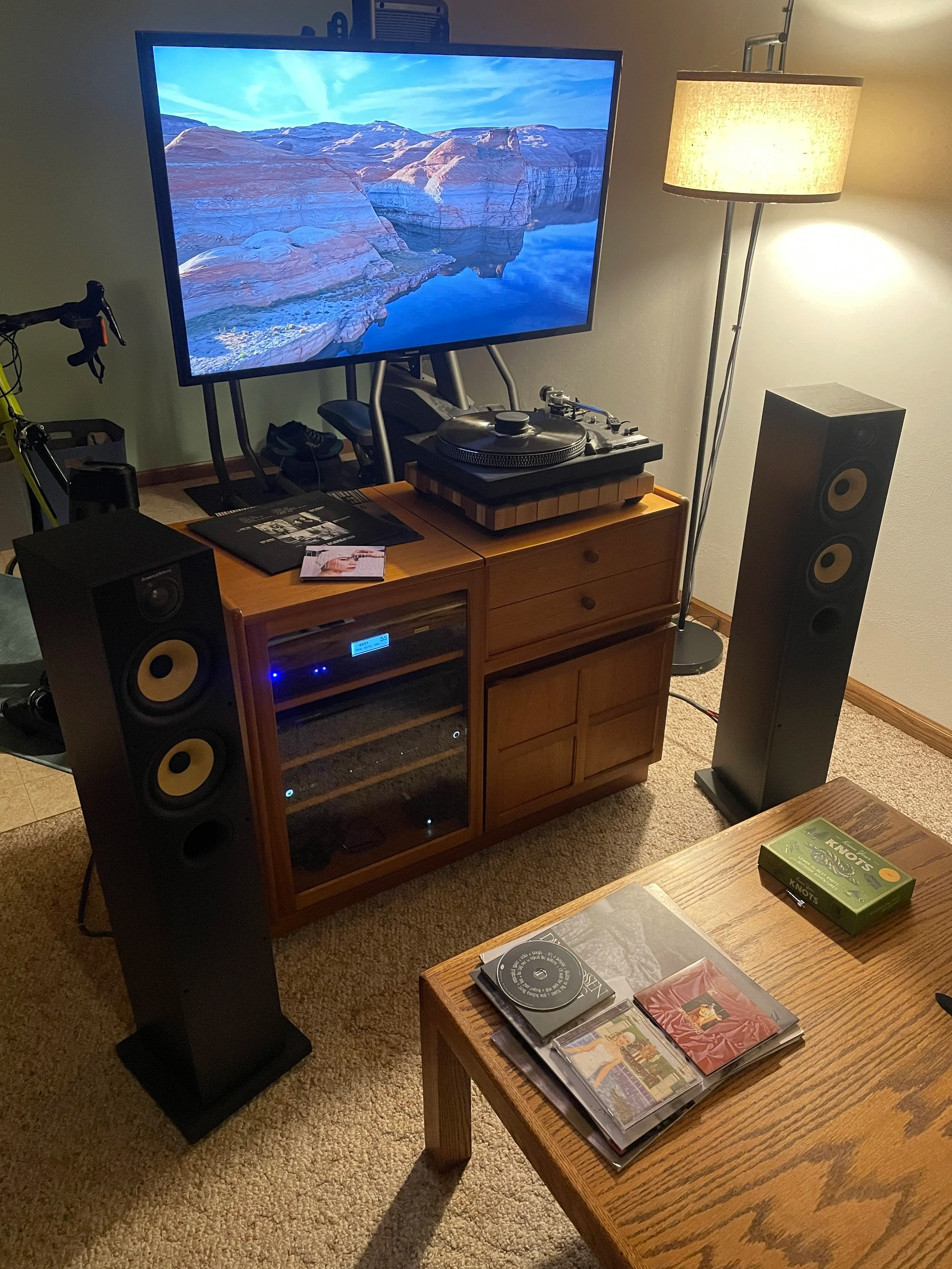
I thought maybe I would share a few records that I have been playing lately. Some of it is new music and some is newish music. I have always been a little slow on the uptake with new music often discovering things 5-10 years after release. Fortunately, no one is looking to me for music advice, nor should they really. A couple of years ago I purged my LP collection and sort of started over. I now have about 60 classical records which are a very wide mix of early music, chamber music, symphonic music and 20th century music. It functions as a good reference for studying pieces I might play in tandem with my old classical CD collection which I’ve had since college. All together this portion makes up about 150 different albums and I am happy to say it is music I have listened to well. It’s not a huge collection, but it is a representative selection of music I enjoy listening to and I think that’s kind of my goal in my collection of music. I want to look at my record/cd collection and love every recording. Lofty, I know.
The Madison Symphony recently played Brahms 2nd piano concerto which has a fairly prominent cello solo in the third movement. I had to learn this solo for my audition for my current chair in MSO and every time we play the piece I have the chance to relearn the solo in the off chance that my stand partner becomes violently ill. If you read my last post, I made an allusion to the fact that being an Assistant/Associate principal string player is all work and no play. I often have to prepare to play rather difficult solos that I will never have the chance to actually perform. This coming week we are playing Korngold Violin Concerto which is covered in cello solos, many of which get lost in the texture. It’s like having an uncredited supporting actor who has many lines, but for some reason gets paid like an extra. I initially had the thought that looking at the cello part one would think this piece originated as a double concerto, but when you listen to the piece you realize that the more likely explanation is that Korngold just liked the cello and wanted to feature it in some way. When one listens to the piece however, there is little awareness of the principal cellist as a significant presence. The part is pushed way into the background by the soloist’s part and the thick orchestration.
I recently discovered that I own a recording of the Cleveland Orchestra and Rudolf Serkin playing Brahms’ second piano concerto under Szell. This was my prep record for our concerts last month.
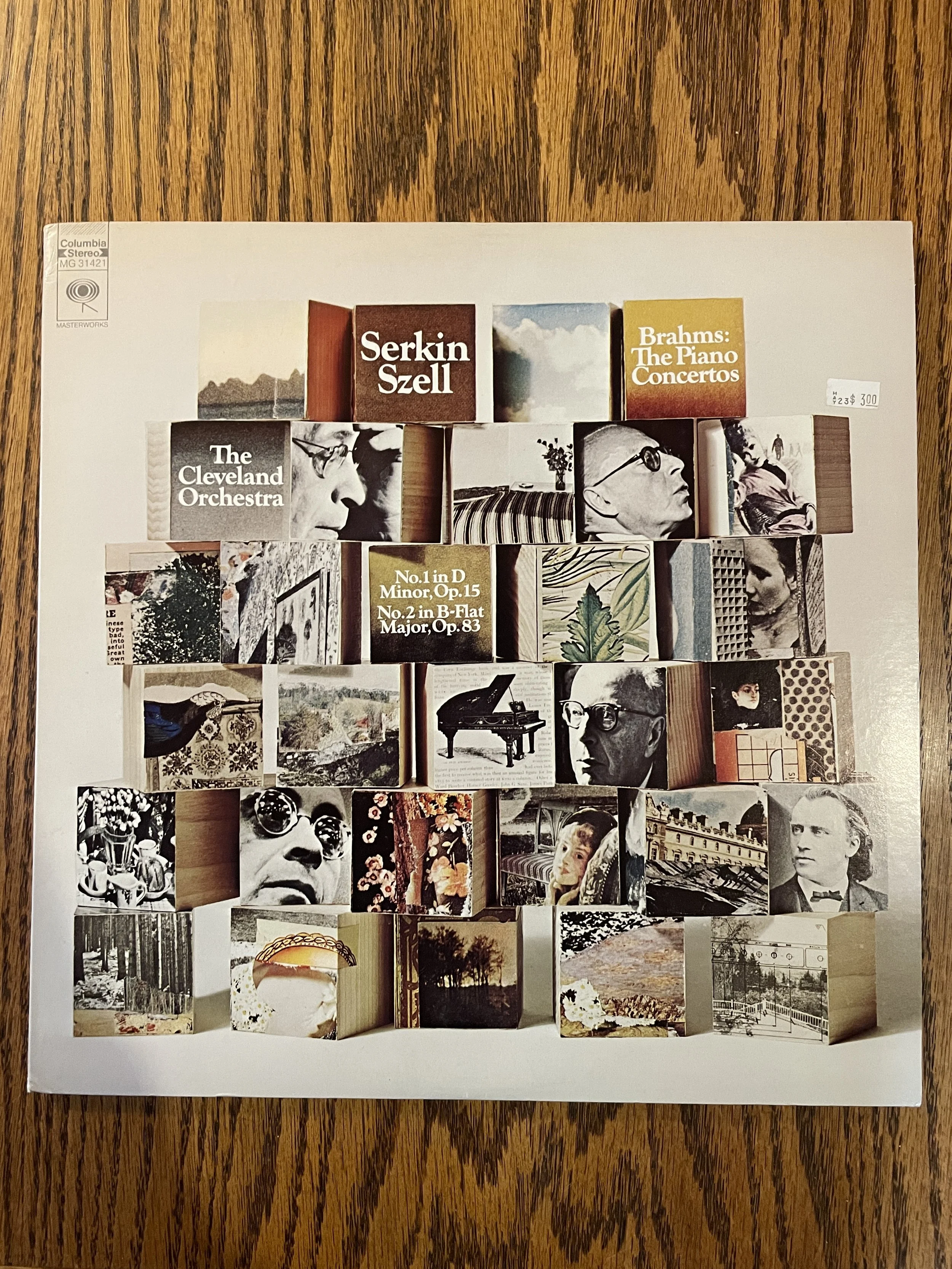
It is hard to understate the usefulness of a good recording heard on a good sound system. I find in this recording that it is not just the musical information that is exposed, but something of the humanity of the recordings is opened up to the listener. The cellist in this recording plays with beauty, but also imperfection. This may seem initially like a negative judgement, but it isn’t at all. I have talked with friends recently about the playing of a particular soloist who comes through here from time to time and how their playing it lacks any hint of imperfection. That lack of imperfection is precisely what makes it difficult for me to connect with this musician. I think as audience members we need to feel that the person on stage has some fallibility. This is the same reason that Superman is not relatable. He is supposed to be the good guy, but his powers make him nigh invulnerable and therefore not interesting to us as imperfect and vulnerable humans. I wonder if this soloist has ever thought about that conflict…. not with Superman, but with their own excessively perfect playing perhaps making them unapproachable.
On the flip side, a mistake can make the audience start thinking about the performance instead of just experiencing it. My roommate during my freshman year of college was an acting major. He was watching something in our room with some of his colleagues one night and they all were having a chuckle about the acting being bad. I asked him how he could tell if the acting was bad and his response has stuck with me. He said “If you’re thinking about the acting, it’s bad acting.” So in addition to being connecting, “mistakes” can sometimes take the audience out of the experience and make them think about the ingredients of the performance rather than tasting the whole performance cake. But while we never want mistakes to remove an audience from the experience, I think maybe there’s a kind of playing which contains enough openness that the mistakes inevitably make their way through and if they feel authentic to the performance then these mistakes can ironically be connecting.
Of course I don’t only listen to classical music. When people ask me what else I listen to, I sort of hem and haw and don’t give them much of an answer. I wish I was a bit more steadfast in my taste, but it’s eclectic and ever changing. There are a few albums in my collection that I love every time I hear them and that may be either because they are just musically beautiful or they are tied into some memory for me that brings me joy. Here are a few CDs that I have enjoyed in the recent past and the distant past.
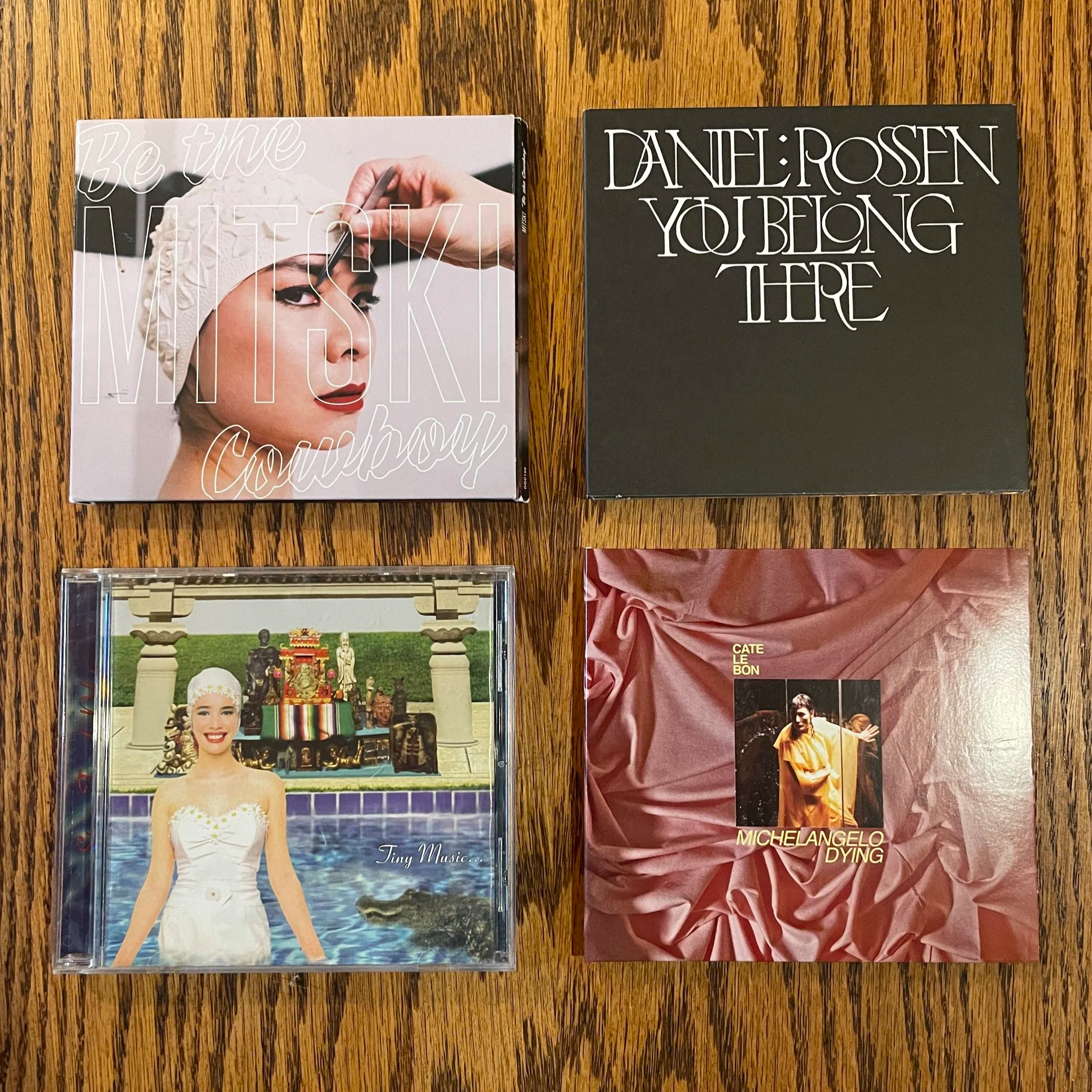
clockwise from the upper left, there’s Mitski’s Be the Cowboy (2018) which I picked up shortly after release. Someone I went to school with was opening for her on tour I think, or maybe they were just IG buddies. I don’t know. I had not heard of her, but I decided to just buy this CD based on the aforementioned connection and a review I read. This album has been on sporadic rotation ever since. There is something about the song-writing that feels like it resonates inside me. Good lyrics speak to our subconscious in ways we don’t fully understand and the meaning often develops over time alongside our life experience. All art does this to an extent. I think this album deals with an ever present sinking feeling of wanting something/someone, wanting to be desired and simultaneously wanting it/them to go away; The desire to be connected and this feeling that connection can only be approached from the side because attempting to live it head-on might make it vanish. The love in this record feels like it exists in full dreams and very small spoonfuls of reality. This album is really stunning in its emotional depth and also the deftness and imagination of the musical settings to Mitski’s lyrics. I highly recommend it if you want to feel a little sad and also kind of strong.
Daniel Rossen: You Belong There. I picked it up a few years ago from Bandcamp on a Bandcamp Friday. I have been a fan of Daniel Rossen for a while. His playing and singing clearly defines the sound of Grizzly Bear and he brings that unmistakable vocal color and guitar playing which is both whimsical and deadly serious at the same time. Evidently he also doubles on piano, cello, double bass, woodwinds and synths and knowing this it is interesting to try to pick out the layers in this recording. I’m not even certain, as good as my sound system is that I am able to hear everything that was put into this record, but while the details are obviously very important, the more important thing is that they coalesce into a clear energetic and textural statement. In the same way that lyrics can work on the subconscious, so too can a backgrounded cello or clarinet(I have no idea if there’s a clarinet, that’s just an example.) So even if we don’t hear it consciously we might miss it if it wasn’t there. This album, though I have owned it for some time has been enjoying increased rotation as of late. I think it was one of those albums that took a while to understand and I think I’m still trying to peer into it. The lyrics, unlike Grizzly Bear or Department of Eagles feel much more personal and complex and they have until now registered largely as beautiful sounds. I suspect the meaning will become more clear over further listens. Of course the meaning is made by the listener, so this says more about the way that I listen than about the album itself. I have often found that I listen to music as sound rather than language. Some record certainly exploit the sonic ambiguity or obfuscation of lyrics, but I don’t think that’s what is going on here. The diction is clear and sung with purpose. Rossen wants us to hear the lyrics. In any case, the instrumental work on this album is so unique and textural. You can almost touch it and that is something I’ve admired about Rossen’s work for years.
I was first introduced to Cate Le Bon’s music in 2014…I think. I went to her show at the now defunct Frequency. I didn't know who she was, but my partner at the time had suggested we go to the show. One of the lovely things about music is the way that a new artist may just appear in your life and then become really important to you musically. I often find that the artists I love most are artists that someone I care about introduced me to. Anyway, Le Bon was touring with the album Mug Museum(which I also own and listen to from time to time). Frequency was a very small standing room only venue right off the capitol square and it always felt special to see an act like this in such a small space. One of the things that makes a really good composer is understanding how instruments and voices interact with one another in time/space. Ravel, for example, is well known for writing music that is incredibly well orchestrated. You can hear every little thing within the score even though there is often so much going on. So when you play it you have this feeling like you are really part of the music making at all times. When I listened to Le Bon’s show I could immediately hear and understand every musical element that was taking place and felt improvisatory while being really well composed. I was really taken with the juxtaposition of softness against edge in Le Bon’s music and still am. She is clearly an excellent producer on top of being a great musician and that comes across in Michelangelo Dying which arrived last week. I have been listening to work music lately, so I haven’t had much time to really sit with it yet, but I’m looking forward to spending some more deep listening time with it.
My brother gave me Core, my first STP album, for my birthday when I was maybe ten years old. I had no idea that listening to them would become such a pastime for me. I picked up Songs from the Vatican Gift Shop and Core on used CD from Strictly Discs last week. This album is still a great listen and it is especially good for riding one’s bike to. That could probably be said about most STP albums. Every track, even the down-tempo ones feel like they are propelling you along. It’s not angry energy, but it is music that you listen to when you want to be energized or maybe even a little overwhelmed. I used to do janitorial work to this album and STP always makes me think of summer.
Okay, that’s all for now. I’m working on another post that delves a bit more into the hi-fi thing and its utility in practicing the cello and conceiving of sound. Stay tuned